Rotocast or injection: the choice is made before your first drawing
Why a hollow PVC body and a detailed hard part belong to different mould families, and the wall, cycle and shrink numbers to settle first.
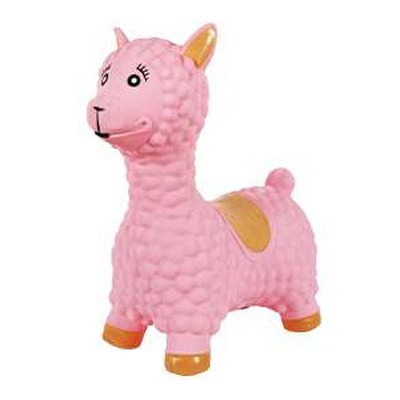
Rotocast or injection is not a pricing question, and it is not one a toolmaker should answer for you. It is settled by what the part has to do. Every animal hoppers programme we quote starts there — before anyone opens a drawing file — because the answer decides which shapes you are allowed to draw.
Get it wrong and the drawing comes back. Not because the design is bad. Because it belongs to the other process.
Two moulds, and only one of them is steel
An injection tool is a machined steel block with a cavity cut into it, and molten compound is forced into that cavity under pressure. ABS, PC, PVC, PA, PMMA — the hard compounds. Pressure is the whole point: it fills thin sections, it holds tolerance, and it runs many cavities in one cycle.
A rotocast mould is something else entirely. It is an electroformed shell — copper, sometimes nickel, plated onto a wax pattern until a working skin forms, then backed with a frame. Plastisol goes in, the shell closes, the frame turns in an oven, and the paste layers itself onto the wall. The excess pours back out.
No pressure anywhere in that chain. Which is the fact that decides most drawings.
What a shell will not give you
Paste that has to flow on its own will not fill a sharp undercut, a deep engraved line, or an edge that has to read as a crisp moulded edge. It is a liquid in a warm spinning shell, not a fluid being rammed into steel, and it behaves accordingly.
So the detail moves. Onto a separate injection-moulded part that gets assembled. Or onto pad printing, which handles a curved surface better than the shell ever will. Or out of the design altogether, which is the answer nobody enjoys hearing in week two.
Does that make rotocast the cheap process? No. It makes it the right one for a PVC animal hopper — a hollow body that has to hold air and nothing else.
The two minutes and the ten
Published window for the rotocast oven: 250–320 °C for one to five minutes. Then a curing oven at 80–120 °C for five to fifteen minutes. The best case in the same literature is about 280 °C for two minutes, cured at about 100 °C for ten.
Those two numbers are a cycle, and a cycle is a fixed cost. Forty shells in a load and four shells in a load run the same two minutes and the same ten, plus heat-up and cool-down at each end. The oven does not know how big your order is!
Turn the heat up and you do not get a better part. At 320 °C for five minutes the same source reports worse crack resistance and worse colour fastness than the 280 °C example. Hotter and longer, worse part — so "just cook it harder" is not a dial a buyer gets to ask for.
Where the wall goes thin
Thickness variation on a rotocast part is a mould problem before it is an operator problem, and that distinction is the fastest way to tell a plant from a brochure.
Plating does not build evenly. Where the shell wall is thick, the mould surface runs cooler and draws less paste, so the part comes out thin. Where the shell wall is thin, it runs hotter, draws more paste, and the part comes out heavy. The remedy is local — a sheet of steel wrapped over the thin area to change how that patch takes heat. The heavy area has no fix short of a new shell.
Injection has the same conversation with a completely different cause. Sink marks, weld lines, silver streaks, short shots — the standard text lists fourteen defect classes and spends half its moulding chapter on parameter tuning. On an injection part the wall follows flow and packing. On a rotocast hopper the wall follows the shell. Same complaint from the buyer, opposite diagnosis.
Three to four per cent you cannot inspect
PVC shrinks as it cools, so the pattern skin is cut three to four per cent larger than the production skin. That allowance is fixed before the first saleable part exists. On a 60 cm body, three per cent is 18 mm — not a rounding error, a seperate pattern and a second plating run.
No incoming inspection catches this. You find out when the parts come off the shell and the proportion is wrong, which is why the shrink figure belongs in the tooling conversation rather than the sample report.
Fixed cost over unit value
Minimum order is fixed cost divided by unit value, and a rotocast run carries five of them: the smallest batch a mixing tank can make and must use before it sets; one oven load, priced the same at four shells or forty; a colour change, with the wash-out and first-off scrap behind it; the electroformed tooling; and the lost continuity of slotting a short job into a full schedule.
Tooling runs US$600–1,500 per mould. A US$1,200 shell spread over 3,000 pieces is 40 cents a unit. The same shell over 300 pieces is four dollars — before a gram of plastisol.
That is the whole explanation for three numbers people treat as policy: 3,000 pcs under 15 cm for a catalogue item, 300 pcs at 15 cm and above on an existing mould, 500 pcs for a bespoke large item cut on a new mould. One fixed block, measured against three unit values. Our 15 cm line is shorthand for unit value, not a rule about size.
Large animal hoppers tend to finish their paste batch at the same time as the order. On a 12 cm duck the tank still has paste in it when the last mould comes off.
Paint, print, four per cent
Colour usually goes on as sprayed film, with eyes and marks added by pad printing — a silicone pad lifting ink off an etched plate and pressing it onto the curve. Film on a plastic toy is typically held at 15–25 µm, an industry range; an air gun puts roughly half its material on the workpiece, so you buy about twice the lacquer that ends up on the part.
Then the acceptance line, which is the only one worth arguing about: more than 4% of the film lifting in an adhesion test and the batch does not ship. Four per cent, measured, not a colour reading and not a gloss reading.
What to settle before the drawing
Four questions, and none of them needs a factory visit.
- What does the part actually do — hold air, hold coins, hold a shape on a shelf? A hollow body and a detailed face are two different mould families, and bouncy animals with a crisp moulded muzzle are usually an assembly, not a shell.
- Where is the wall measured, on which points, and with what? Agree the points before the sample, or the second batch gets checked against memory.
- How many colours, really? Each colour is its own paste batch and its own wash-out, so a four-colour programme carries the batch floor four times while the piece count stays flat.
- Is the tooling invoiced once, or amortised into the unit price? The second is legal. The first is clearer.
And the calendar. Production runs about 40 days from artwork approval, and tooling sits in front of that, so the process decision is the earliest date on the plan. A large hopper ball drawn as a shell and re-drawn as a two-part moulded body costs a month before anyone touches a machine.
If the shape is a hollow body with a slot in it, it was always rotocast. If it is a face with a seam, it was never going to be. That arithmetic runs the same whether the shelf holds animal hoppers or money boxes, and it is done before your first drawing — send the sketch, the size at the widest point and the quantity, and we will confirm which family it belongs to before anyone quotes tooling. Start an enquiry.